Click On Picture For Larger Image


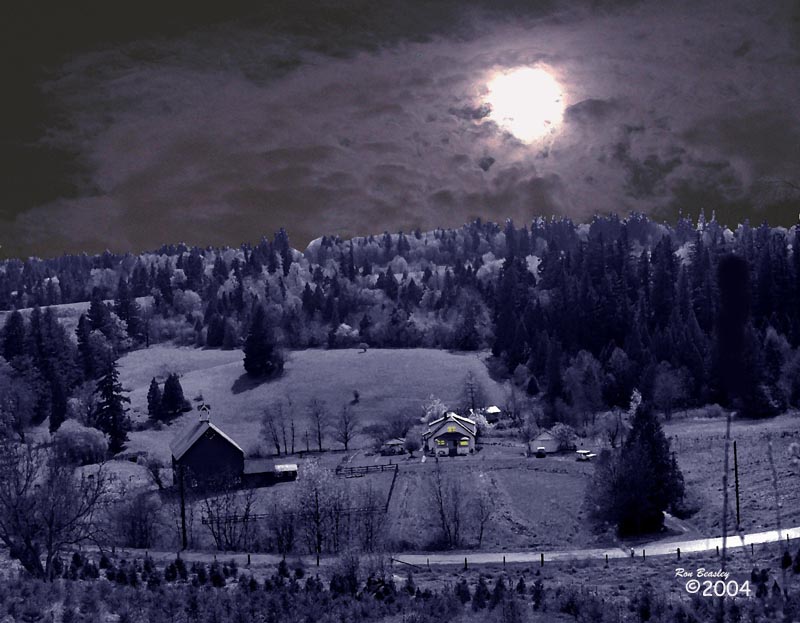
I used this same picture for a portrait of a local artist.

Click On Picture For Larger Image

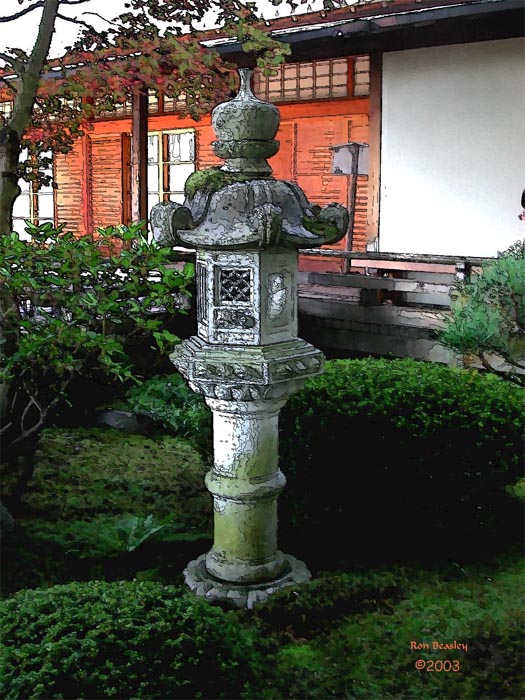
 Like many photographers over 40 I cut my photographic teeth on black and white. It was pure magic - loading the film on a reel and processing it, the result a strip of images. Then came the magic you could see - the print appearing on the paper in the developing tray. I have not taken a roll of film for almost six years. The magic may be gone but those wonderful black and white images don't have to be. The above was a color digital image taken last summer. It was converted to black and white and then the contrast was adjusted with PhotoShop. My first attempt but not my last. The gray scale is certainly better than the overwhelming green of the original.

Kodachrome
You give us those nice bright colors
You give us the greens of summers
Makes you think all the world's a sunny day, oh yeah!
I got a Nikon cameraI
love to take a photograph
So Mama, don't take my Kodachrome away
Mama,
don't take my Kodachrome away~Paul Simon - 1973

It is an elaborately crafted photographic film, extolled for its sharpness,
vivid colors and archival durability. Yet die-hard fan Alex Webb is convinced
the digital age soon will take his Kodachrome away. "Part of me feels like,
boy, if only I'd been born 20 years earlier," says the 56-year-old photographer,
whose work has appeared in National Geographic magazine. "I wish they would keep
making it forever. I still have a lot of pictures to take in my life."
Only one commercial lab in the world, Dwayne's Photo in Parsons, Kan., still develops
Kodachrome, a once ubiquitous brand that has freeze-framed the world in rich but
authentic hues since it was introduced in the Great Depression.
[.....]
For decades, Kodachrome was the standard choice for professional color photography and avant-garde filmmaking. At its peak, a reverential Paul Simon crooned "Mama, don't take my Kodachrome away" in 1973.
It's the only film to have a state park named after it -- photogenic Kodachrome
Basin State Park in the red-rock canyons of southern Utah.
During its mass-market heyday in the 1960s and '70s, countless snapshooters put friendships in peril every time they hauled out a carousel projector and trays of slides to replay a family vacation.
But the landmark color-transparency created by Leopold Godowsky Jr. and Leopold Mannes -- "God and Man" in photo research circles -- went into a tailspin a generation ago. It was eclipsed by video, easy-to-process color negative films and a tidal-wave preference for hand-sized prints.
Nowadays, Kodachrome is confined to a small global market of devotees
who wouldn't settle for anything else. And before long, industry watchers say,
Kodak might well stop serving that steadily shrinking niche as the 128-year-old
photography pioneer bets its future on electronic imaging.